NATURA MORTE
Digital Still Lifes by Winkhaus
120 CM X 180 CM, 2025/2026, FINE ART PRINT ON CANVAS, SHADOW GASP , EDITION OF 10
In the series Natura Morte, Tina Winkhaus translates the classical still life into the digital age. The works are digitally composed photographs that formally and conceptually reference the visual tradition of the Old Masters—while simultaneously reworking it in a radical, contemporary way.
As in the works of Caravaggio, Zurbarán, or the Dutch vanitas painters of the 17th century, the motifs exist between beauty and transience, between precise observation and metaphysical charge. Animals, fruits, plants, and architectural fragments emerge in dramatic light, modeled out of deep darkness. The light is not illustrative but existential: it highlights, isolates, dissects—and recalls the moral rigor of Baroque painting.
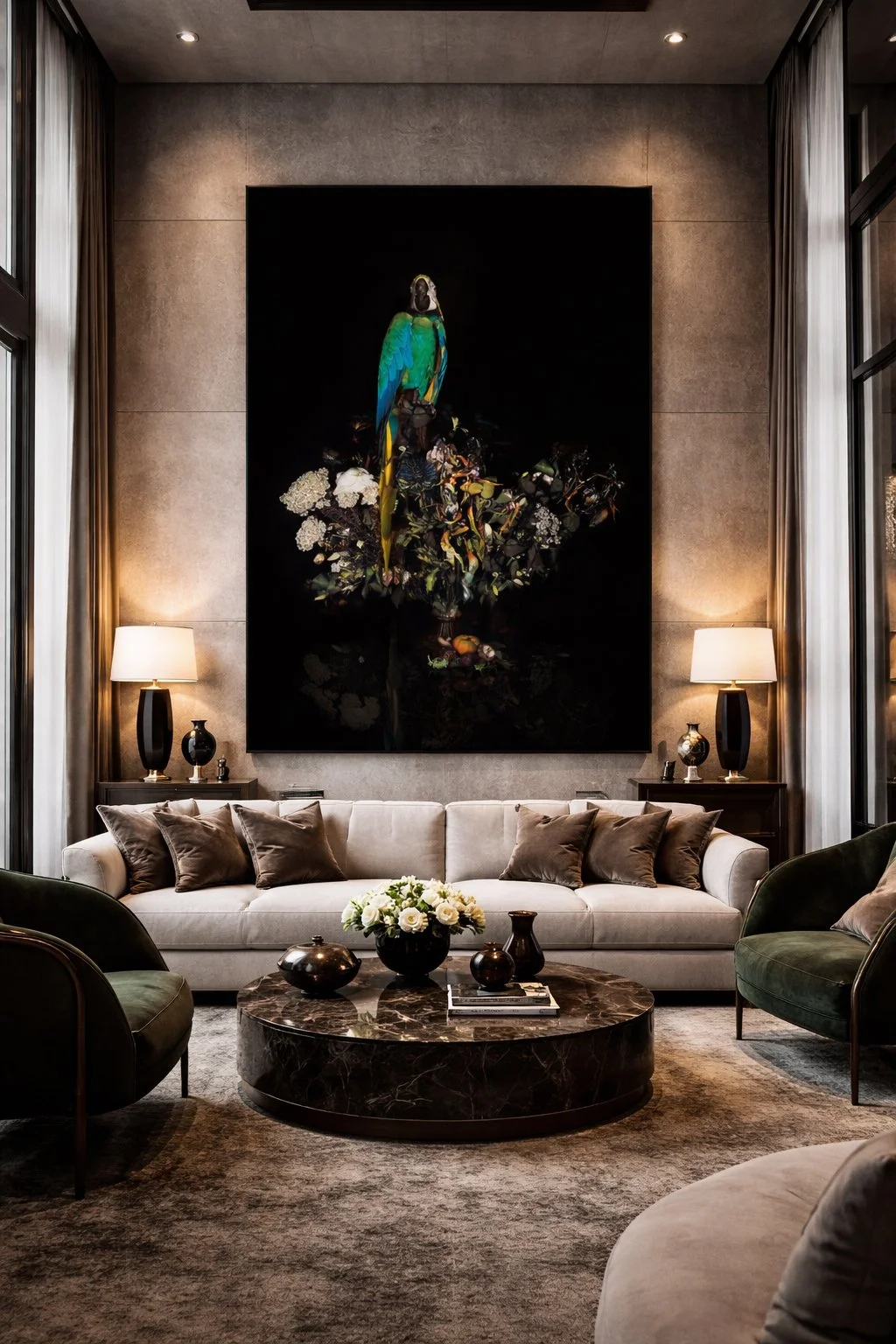
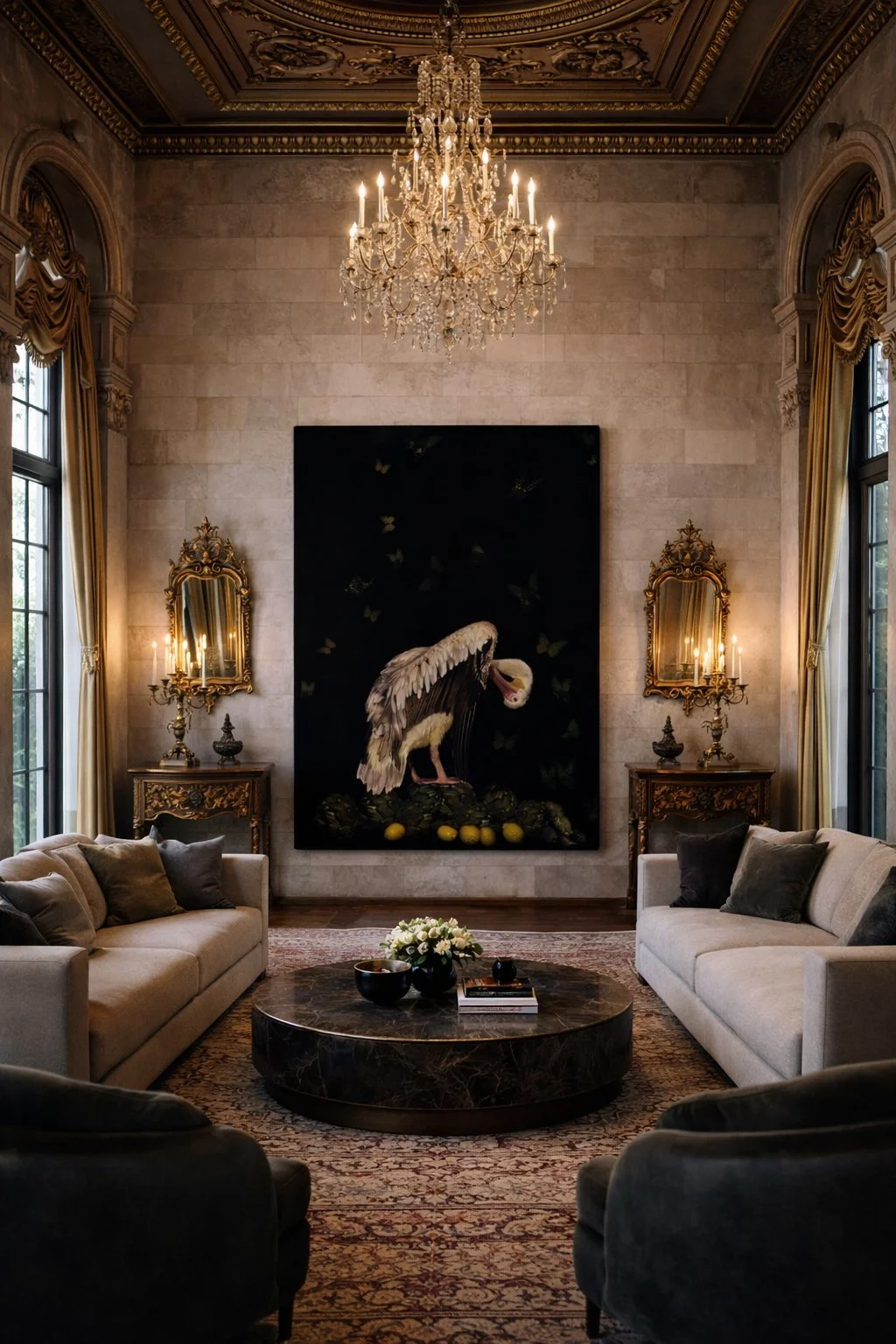
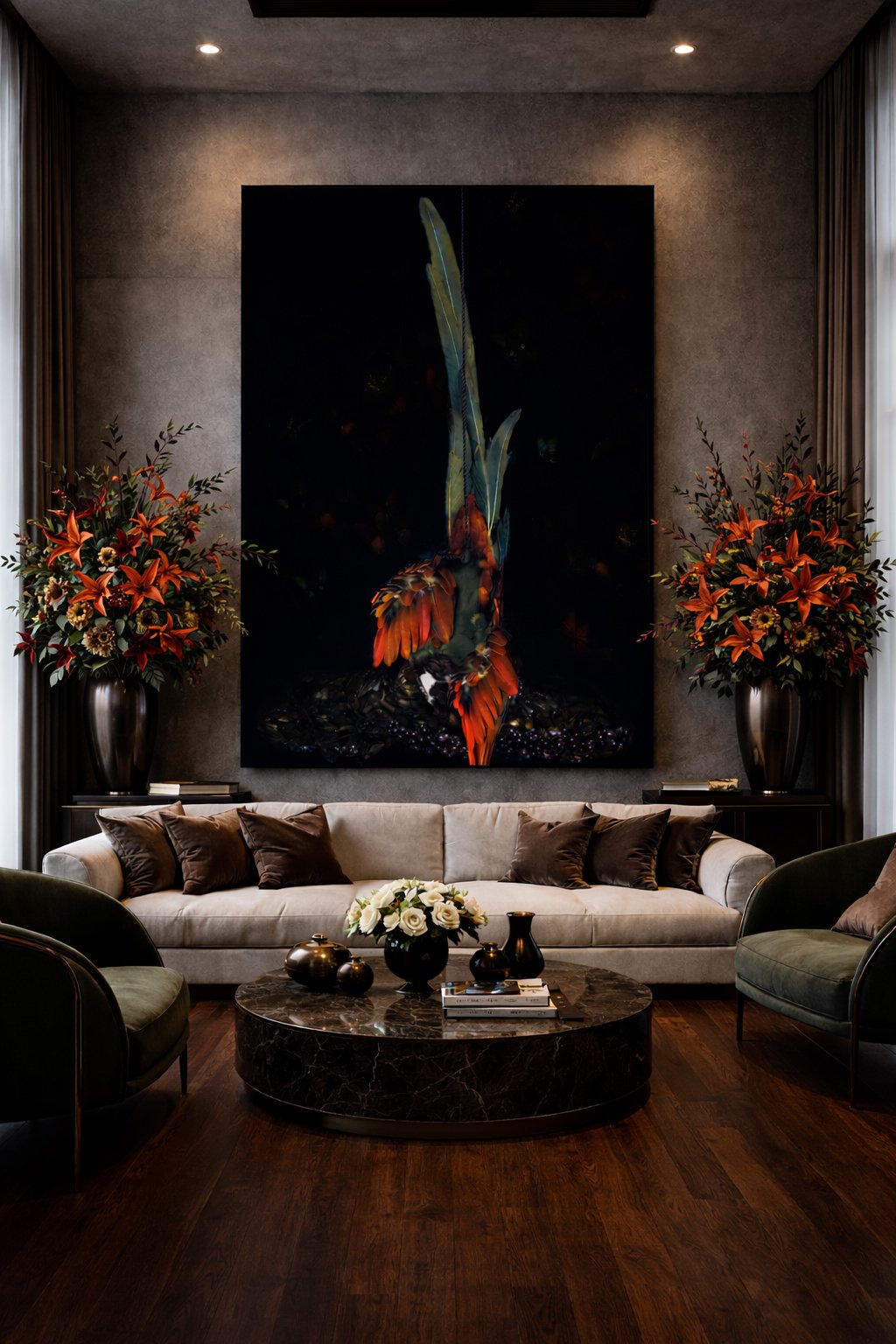
Unlike in classical natura morta, the animals depicted by Winkhaus are not merely symbolic. Parrot, pelican, and other creatures appear present, almost psychologically charged. They seem to linger, to observe, to suffer, or to withdraw into themselves. Nature is not decorative here, but autonomous—at once beautiful, vulnerable, and unsettling.
Formally, Winkhaus works with a digital multilayeredness that recalls the painterly construction of Jan Davidsz. de Heem or the theatrical spatial staging of Rembrandt. Individual photographic fragments are precisely composed, condensed, and fused into a new reality. Digital technique does not replace painting; it assumes its tasks: the orchestration of light, the structuring of depth, materiality, and iconography.
The series also addresses the relationship between control and loss in the digital age. While Baroque vanitas understood death as part of a divine order, Natura Morte negotiates a contemporary uncertainty: nature as something threatened, fragmented, artificially preserved. Beauty becomes the final form of resistance.
Natura Morte is not a nostalgic return, but a conscious continuation of art history. The works stand in line with the great European still-life tradition—while simultaneously articulating a new, digital Baroque aesthetic for the 21st century.
In der Serie Natura Morte führt Tina Winkhaus das klassische Stillleben in das digitale Zeitalter über. Die Arbeiten sind digital komponierte Fotografien, die sich formal und inhaltlich auf die Bildtradition der Alten Meister beziehen – und diese zugleich radikal neu verhandeln.
Wie bei Caravaggio, Zurbarán oder den niederländischen Vanitas-Malern des 17. Jahrhunderts steht das Motiv zwischen Schönheit und Vergänglichkeit, zwischen präziser Beobachtung und metaphysischer Aufladung. Tiere, Früchte, Pflanzen und architektonische Fragmente erscheinen in dramatischem Licht, aus tiefem Schwarz heraus modelliert. Das Licht ist nicht illustrativ, sondern existenziell: Es hebt hervor, isoliert, seziert – und erinnert an die moralische Strenge der barocken Malerei.
Anders als in der klassischen Natura Morta sind die dargestellten Tiere bei Winkhaus nicht bloß Symbole. Papagei, Pelikan oder andere Kreaturen wirken präsent, fast psychologisch aufgeladen. Sie scheinen zu verweilen, zu beobachten, zu leiden oder sich selbst zu entziehen. Die Natur ist hier nicht dekorativ, sondern autonom – zugleich schön, verletzlich und unheimlich.
Formal arbeitet Winkhaus mit einer digitalen Mehrschichtigkeit, die an die malerische Konstruktion eines Jan Davidsz. de Heem oder die theatralische Raumsetzung eines Rembrandt erinnert. Einzelne fotografische Fragmente werden präzise komponiert, verdichtet und zu einer neuen Realität gefügt. Die digitale Technik ersetzt dabei nicht die Malerei, sondern übernimmt ihre Aufgaben: Lichtführung, Tiefenstaffelung, Materialität, Ikonografie.
Die Serie thematisiert damit auch das Verhältnis von Kontrolle und Verlust im digitalen Zeitalter. Während die barocke Vanitas den Tod als göttliche Ordnung verstand, verhandelt Natura Morte eine zeitgenössische Unsicherheit: Natur als etwas Bedrohtes, Fragmentiertes, künstlich Bewahrtes. Schönheit wird zur letzten Form des Widerstands.
Natura Morte ist kein nostalgischer Rückblick, sondern eine bewusste Fortschreibung der Kunstgeschichte. Die Arbeiten stehen in einer Linie mit der großen europäischen Stillleben-Tradition – und formulieren zugleich eine neue, digitale Barockästhetik für das 21. Jahrhundert.
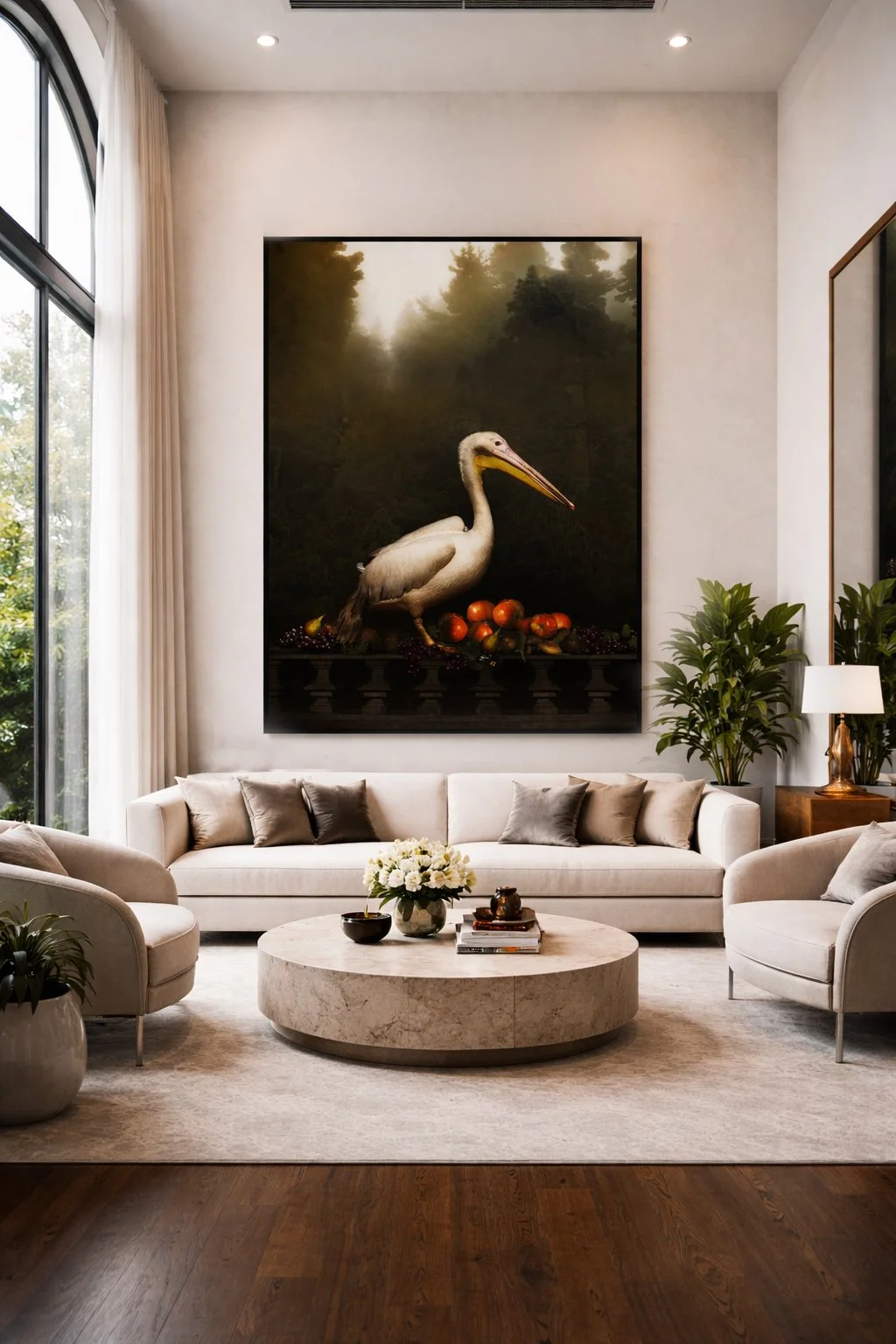
The Pelican next to the still water , 120 cm x 180 cm print on canvas
Suspended Parrot
Still Life with Crocodile
Parrot and Flowers
Still Life with Flamingos, Flowers and Kois
Pelican, Artichokes and Lemons
The Pelican next to the still water